This guide explains how Spin Automatica systems support consistent automatic spinning workflows from setup to quality checks. Objectively, the term “Spin Automatica” commonly describes automated rotary operations used across manufacturing for uniform processing, reduced variability, and traceable production control. The article covers evaluation criteria, operator conditions, and practical FAQs to help teams assess fit, risks, and expected outcomes.
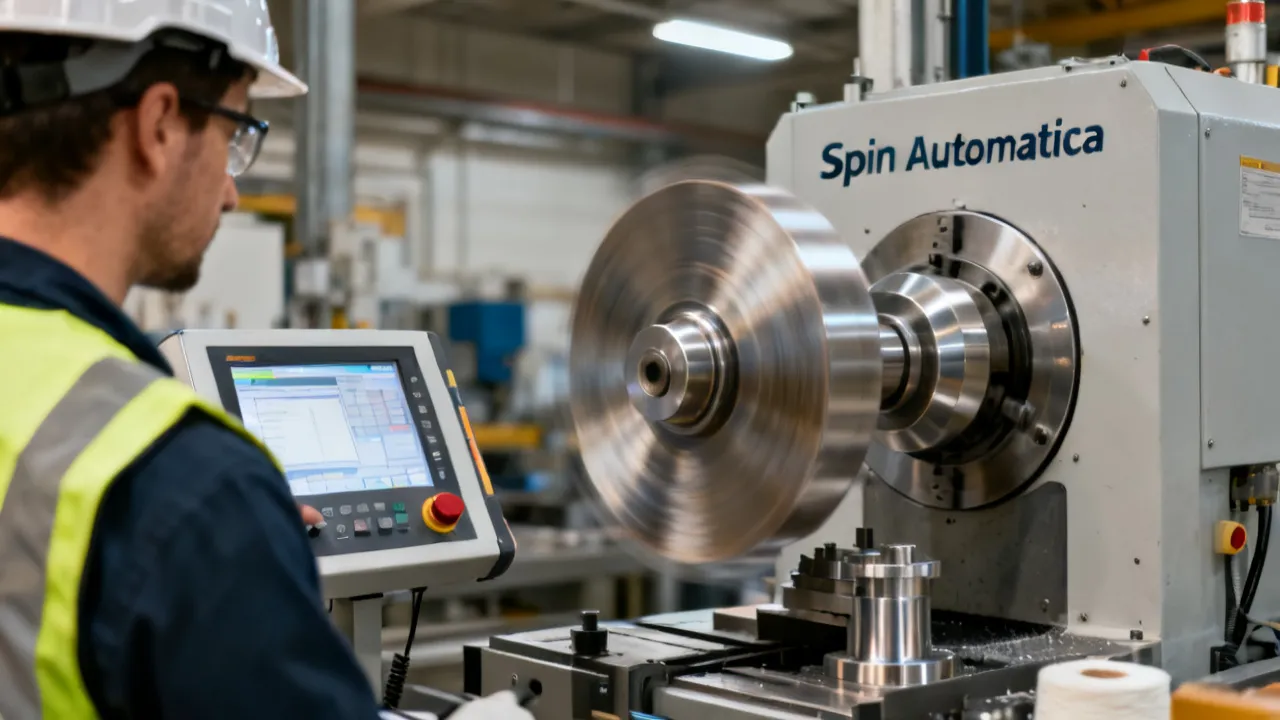
Spin Automatica is typically used to describe an automated, rotary-driven spinning workflow designed to improve consistency in industrial processing—especially where uniform rotation, repeatable handling, and production traceability matter. For organizations evaluating such systems, the very important considerations are process capability, safety and guarding, data capture, and how well the machine’s control logic matches your material behavior and production tolerance requirements.
Because “Spin Automatica” can refer to different machine configurations depending on supplier and application, readers should treat pricing and lead times as scenario-dependent. Instead of relying on assumptions, use a structured assessment: define your target quality metrics, confirm process windows (speed, torque/load, dwell time, and environmental constraints), and validate that the supplier can support commissioning and operator training. In many purchasing evaluations, the “top” system is the one that demonstrably reduces variability in your specific use case—rather than the one with the widest feature list.
Stable automated spinning is not only a mechanical question; it is a system question. Even if the rotation mechanism is robust, variability can enter through part loading, fixturing, material preparation, ramp profiles, sensor calibration, or poorly managed recipes. A mature implementation treats those variables as controllable inputs, measures their effects, and locks in the process logic so operators are guided by repeatable procedures rather than memory. That is why disciplined qualification and acceptance testing—paired with strong documentation—often provide more value than a simple promise of “automation.”
In professional manufacturing environments, spinning and rotary processing are widely used for forming, coating uniformity, surface finishing, mixing/dispersion-related steps, and certain material conditioning tasks. When teams say “Spin Automatica,” they often mean a machine concept that integrates automation elements—such as programmable motion control, automated part handling or fixturing cycles, and recipe-based parameters—so repeated runs follow the same logic.
From an industry expert’s perspective, the term is top interpreted as a functional approach: automatic spinning where motion parameters and cycle steps are executed with repeatability, while inspection and traceability can be recorded to support quality management. Even when the same underlying physics applies (rotational speed, centrifugal forces, dwell/contact time), the outcome depends heavily on how automation controls those variables.
It is also common for “Spin Automatica” projects to involve multiple layers of automation, even if customers only think in terms of rotation. For example:
Different suppliers emphasize different portions of the stack. Some deliver primarily the mechanical rotary system plus a recipe interface; others deliver a complete line integration with sensor networking, barcoding, and quality workflow. Your definition of “Spin Automatica” should therefore be clarified early. The best approach is to ask for a functional description of what is automated (motion only vs. motion plus handling vs. motion plus data plus inspection workflow).
Spin-based automated workflows appear across sectors with quality-sensitive outputs. Typical categories include:
That said, the very suitable application depends on your material properties, viscosity range (if liquids are involved), part geometry, and required tolerance. If your part design creates complex airflow or contact dynamics, the control strategy and fixturing design become even more decisive. For example, a part with deep cavities may have different fluid behavior than a flat plate. A coating that is sensitive to shear stress may respond dramatically to ramp profiles and contact duration, even when peak RPM is the same.
It can also be valuable to consider “adjacent” spinning operations. Some factories use spinning-like rotary steps not only to distribute material but also to apply lubricants, to homogenize a mixture in a controlled container, to remove volatiles at a predictable rate, or to pre-condition substrates for downstream deposition. In those cases, the “spin” may be only part of a larger thermal or chemical process window. A good Spin Automatica setup will therefore include the surrounding steps (preload, dwell, post-rotation stabilization, and sometimes environmental controls like temperature or humidity monitoring).
As you define scope, ask whether your process is best described as:
Those distinctions can help you choose the right sensor set, the right recipe structure, and the right acceptance tests.
When assessing a Spin Automatica solution, expert evaluations typically focus on a few high-impact drivers. The best results usually come from aligning mechanical design, control philosophy, and quality workflow so that the machine behaves predictably even when day-to-day conditions shift.
Spinning outcomes are sensitive to how the system reaches and maintains target rotational conditions. Ask whether the supplier can provide information on:
To go deeper, request details that relate motion to process physics. For instance:
For stable automated spinning, a key question is not just “What RPM can you reach?” but “How precisely does RPM follow the commanded profile at every moment that matters?” In many coating/distribution applications, early transients during ramp and start-of-wet significantly influence final thickness uniformity. A robust implementation will therefore specify and document its motion profile behavior, including any compensation for motor dynamics or mechanical compliance.
A rotary system can be precise but still produce variability if fixturing allows micro-movements, imbalance, or inconsistent contact. The “top” configuration often depends on:
Fixturing determines whether the machine’s repeatable motion translates into repeatable process conditions. If a part sits slightly off-center, then the effective centrifugal environment changes: the distribution pattern can shift, thickness can become uneven, and stresses can vary. Even if the difference is small, coatings and thin films may respond strongly due to fluid dynamics.
When evaluating fixturing, ask about:
For best stability, the fixturing should be designed as part of a process system, not as an afterthought. Often, the best machine can still fail to meet quality targets if the fixturing introduces inconsistent contact, inconsistent heat transfer (for curing steps), or variable thermal mass effects.
Automation is valuable when teams can standardize operations. Look for recipe features such as parameter locking, job logging, and operator prompts that reduce “tribal knowledge” reliance. If your organization follows formal quality systems (e.g., ISO-aligned practices), a clear method to link machine settings to produced batches can be a major advantage.
Recipe management is also about change control. A stable automated spinning system should support:
Traceability becomes especially important when you discover defects days or weeks later and need to perform root-cause analysis. Without recipe logs and time-stamped events, the team is forced to reconstruct conditions from memory or from incomplete production records. That slows down CAPA and can increase scrap and rework.
For Spin Automatica systems, strong recipe design often includes sensible defaults and guardrails. For example, if a commanded dwell time is outside a qualified range, the machine should warn or prevent the run. If the part type selection does not match the fixturing configuration, the system should require confirmation or block the cycle. Such guardrails reduce operator error and increase process stability.
Rotating equipment introduces risk. Confirm safety requirements—interlocks, guarding, emergency stop strategy, and safe maintenance procedures. Equally important is maintainability: uptime is influenced by how quickly service technicians can access wear components, and how parts are documented for replacement schedules.
Safety should be evaluated beyond generic statements like “we have guarding.” For spinning machines, key safety considerations include:
Maintainability also ties directly to stable automated spinning because machine downtime disrupts process rhythm. If a spindle or drive component fails, a facility needs an expected repair time and an available spare parts plan. Ask the supplier:
A stable system over the long term is not only a stable process but also a stable maintenance regime with clear documentation.
It’s common to encounter broad price ranges when searching for Spin Automatica systems, largely because cost correlates with capacity, automation level, and integration scope. In practice, pricing is influenced by:
For objective planning, request a total cost of ownership breakdown rather than focusing solely on sticker price: include installation, training, maintenance access, spare parts strategy, and expected downtime windows. Also verify whether installation is “plug-and-produce” or whether utilities and environmental controls must be upgraded.
To make comparisons fair across suppliers, you should also consider:
In stable automated spinning deployments, the “hidden” costs often include time spent waiting for commissioning clarifications, redoing acceptance tests due to incomplete documentation, or modifying fixturing because design assumptions were wrong. A strong supplier will reduce those risks by providing clear documentation early, by supporting trials with representative parts, and by aligning the system design with your process needs.
Supplier quality is as important as the machine specification. When evaluating a Spin Automatica vendor or integrator, consider asking for:
Where supplier details are not explicitly available in your request, it’s still reasonable to evaluate suppliers based on verifiable process documentation and service structure (response times, warranty terms, escalation paths). If you’re sourcing internationally, also clarify logistics responsibilities and responsibility boundaries for installation and initial testing.
Credibility also shows up in how the supplier handles ambiguity. If you share a partially defined process (unknown viscosity range, limited material data, new part geometry), does the supplier propose a method to qualify the process window and reduce risk? Or do they push generic default recipes without understanding your material behavior? The former approach tends to produce stable performance because it anticipates real-world variations.
Strong vendor evaluation also includes verifying control system maturity and support:
For stable automated spinning, it is particularly important that the supplier can help you manage the “first stable run” process. Many installations fail not because the machine never works, but because the first time they try your material and your part, there is a lot of uncontrolled learning. The supplier should be able to offer a structured commissioning plan so that learning does not turn into uncontrolled downtime.
Even within the same technical standard, adoption patterns differ by region and facility culture. For example, in many manufacturing contexts, Japanese production environments (often associated with rigorous preventive maintenance and standardized work) may emphasize disciplined changeover and operator-proof SOPs. In other regions, the decision may prioritize speed of deployment and flexible integration into existing lines. The core technical requirement remains unchanged—repeatable motion and controlled process parameters—but the emphasis during implementation can differ.
To tailor rollout effectively, align automation design choices with your local workflow norms: how shifts are managed, how operators confirm job start, and how maintenance reporting is handled. These factors influence whether automation delivers stable output over months and years, not just during acceptance testing.
It can also be helpful to consider language and documentation practices. In some regions, work instructions are heavily visual and standardized. In others, they are more narrative. A Spin Automatica system that relies on ambiguous prompts or insufficiently translated HMI messages can create operational instability—especially if multiple teams operate the line. If your facility uses multilingual environments, request that the supplier support language customization and that alarm messages are clear, actionable, and consistent with your internal troubleshooting culture.
Another cultural factor is how data is used. Some organizations quickly incorporate machine logs into quality dashboards. Others focus primarily on physical inspection results. If you adopt a Spin Automatica system that generates rich data but your team is not prepared to review it, valuable traceability benefits may not fully materialize. A stable implementation includes training and workflow design so that data is reviewed at the appropriate cadence and tied to quality actions.
The table below compares common system elements against typical decision outcomes. (Values are representative categories; your exact configuration should be confirmed with the supplier for your material and tolerance requirements.)
| System element | What to look for | When it matters very | Typical impact on workflow |
|---|---|---|---|
| Closed-loop speed/load control | Stable target maintenance and documented control approach | When uniformity is sensitive to rotation consistency | Lower run-to-run variation, easier process qualification |
| Recipe and parameter management | Recipe locking, job logging, change control | Multi-product lines or frequent changeovers | Reduced operator variability, better traceability |
| Fixturing and part handling strategy | Repeatable alignment, anti-slippage design, swap-time documentation | Complex geometry or tight tolerance parts | Improved consistency and faster validated setups |
| Safety and guarding | Interlocks, documented risk controls, safe maintenance access | High-rate production or frequent operator interaction | Reduced incident risk and smoother audits |
| Maintenance design | Access to wear items, clear replacement schedule documentation | Facilities with strict uptime targets | Lower downtime from faster service turnaround |
| Integration into quality workflow | Sensor readiness or linkage to inspection records | Quality systems with batch records and CAPA processes | Better quality data continuity and faster root-cause analysis |
In manufacturing operations, automation’s value is commonly tied to improved process repeatability and traceability. Quality management literature emphasizes that variation must be managed through defined processes, measurable parameters, and controlled changes. For broader background, readers can refer to widely adopted quality frameworks such as ISO 9001 (quality management systems) for process documentation and continual improvement concepts. For statistical process variation concepts, industrial quality engineering often relies on the principles associated with statistical control and measurement systems—commonly discussed in standard quality texts and guidance.
In the specific case of spinning, the process is often highly sensitive to small changes in inputs: contact time, ramp profiles, rotational stability, and part centering. If the facility treats the operation as “mostly the same” run after run, then minor changes can pass unnoticed until the defect rate increases. Once automation is in place, teams can perform more disciplined monitoring because machine logs give consistent time-stamped data. That enables the use of SPC concepts and more structured investigations.
Automation also matters because it reduces operator-dependent variation. Humans may adjust machine parameters differently under stress, may skip steps, or may interpret prompts variably. A well-designed Spin Automatica system uses automation to standardize those steps. However, automation only helps if the recipes are correct, if the system fails safely, and if deviations are logged rather than silently ignored.
Finally, automation enables a stronger measurement chain. If the machine can record the exact runtime and parameter set for every part, then quality measurements (thickness, surface roughness, adhesion, dimensional checks) can be correlated with processing events. That correlation supports process capability analysis and helps engineers refine the process window with fewer guesswork cycles.
Below is a practical, step-by-step approach that expert teams use to reduce uncertainty during procurement and rollout.
Clarify what “good” means for your process. Examples include uniformity metrics, defect rate thresholds, coating thickness targets, surface finish parameters, or dimensional constraints after spinning. Define inspection methods and acceptance criteria before machine selection.
To make this step actionable, specify:
Without explicit acceptance criteria, you risk selecting a machine that can meet certain process specs but does not meet your product quality requirements. Stable automated spinning is ultimately judged by the product, not by spindle performance alone.
Document material properties (or at least ranges), part geometry, and any upstream/downstream requirements. Also capture operational constraints: available floor space, utilities, and operator workflow patterns. This step prevents mismatched expectations between machine capabilities and real production conditions.
In addition to basic constraints, consider process timing and environmental sensitivity. For instance:
Also consider mechanical constraints that affect quality. For example, if the part is delicate, clamping strategy must prevent deformation. If the part is heavy, torque and imbalance handling become more important. Stable output depends on matching the system design to these constraints.
Ask the supplier how they qualify performance. For example, request information about:
If possible, arrange a trial run with representative parts. Even a limited validation can reveal practical issues such as fixturing behavior, balancing sensitivity, or time-to-stable-run phenomena.
Capability evidence should ideally include:
Be cautious if a supplier cannot provide evidence of performance stability, or if their trial results do not match your process steps (e.g., they tested with water when your coating is shear-sensitive). Stable automated spinning should be demonstrated with representative materials and part handling.
Set objective acceptance tests aligned to your quality criteria. Specify sampling plans and measurement methods. Ensure the supplier agrees on who performs measurements, how results are recorded, and how deviations are handled.
When defining acceptance tests, it is helpful to separate acceptance into categories:
In stable automated spinning, the data acceptance portion often prevents future pain. If your team expects traceability for CAPA and then finds that the machine logs are incomplete or not aligned to batch identifiers, the system may fail to deliver its full value despite passing mechanical acceptance.
Confirm the safety strategy: guarding, interlocks, and maintenance access. Build training sessions around real shift responsibilities—startup checks, recipe selection, troubleshooting boundaries, and safe shutdown procedures.
Training should include more than button pushing. Operators and maintenance staff should understand:
If training is weak, the machine can behave unpredictably due to human misinterpretation. Stable output depends on stable human interaction with the automated system.
During the pilot phase, restrict changes and record every recipe revision or operational adjustment. Track issues systematically. Expert teams usually treat the pilot as a controlled learning stage, not a production ramp without data.
Change management matters because early-stage tuning can create a moving target. If multiple people adjust parameters without a structured plan, you cannot later determine which changes improved results versus which changes introduced defects.
A pilot can follow a disciplined pattern:
This approach aligns with the broader quality principle that stable processes come from controlled variation. In an automation context, controlled variation means controlled changes.
After stable runs, update SOPs to reflect actual top practices. If your facility uses formal quality processes, incorporate machine settings and inspection results into batch record logic. Over time, this reduces “informal knowledge” and helps new operators achieve consistent outcomes sooner.
SOPs should include:
A strong SOP set converts the “knowledge” of the pilot into sustainable operational stability.
Spin Automatica implementations succeed when the facility meets operational prerequisites. Common conditions include:
If any of these are missing, the organization may experience inconsistent results and longer commissioning cycles—even when the machine itself performs well on paper.
It can also be beneficial to prepare your facility for data readiness. If your organization intends to use machine logs to support quality management, you may need to ensure:
Stable automated spinning is not just producing parts; it is producing auditable evidence that those parts were produced under controlled conditions.
From an operations and quality engineering viewpoint, the very frequent reasons automated spinning underperforms are not “mysterious machine faults,” but predictable mismatches between design assumptions and real constraints:
Additional failure points that often appear in real deployments include:
These issues are solvable, but they require structured troubleshooting. Stable spinning is best treated as a system that couples mechanical control with material science and operational discipline.
“Spin Automatica” is generally used to describe an automated rotary spinning process—where motion parameters and cycle steps are executed through programmed control to improve repeatability, consistency, and traceable production behavior. The exact configuration varies by supplier and application.
Parameter selection should be based on your material behavior and quality targets. Use a structured trial that varies one or two factors at a time (e.g., speed and dwell time) while holding others constant. Confirm results with your defined inspection methods and acceptance criteria.
For more stable outcomes, consider designing experiments around the process physics. For instance, if your coating distribution is sensitive to shear thinning, then you may need to control not only peak speed but also ramp rates and acceleration profiles. If adhesion issues are linked to curing behavior, then time-under-rotation and any thermal steps matter as much as RPM.
Post-purchase support is often decisive. Look for commissioning assistance, documented acceptance tests, operator training, and a clear maintenance/service plan. Good support reduces uncertainty during ramp-up and helps stabilize output over time.
It is also important to clarify what happens if acceptance criteria are not met. A credible supplier provides a documented path: root-cause investigation approach, timeline for corrective actions, and how responsibility is handled. Stable projects benefit from clear escalation and shared learning rather than blame shifting.
It can be, depending on changeover frequency and how quickly recipes can be validated and locked. Systems with strong recipe management and efficient fixturing can offer benefits even at lower volume, particularly when consistency matters.
Small batch production often increases the importance of setup quality. If setup is inconsistent, then the machine may produce stable motion but unstable product. Recipe version control, quick-change fixturing with repeatable alignment, and standardized loading routines become especially valuable in small batch environments.
Define measurable quality metrics up front, then run representative trials and analyze outcomes using your established inspection tools. Require clear acceptance test documentation and maintain records linking machine settings to results.
Objective verification also includes verifying data completeness. Ensure that the machine records every part with the correct job identifier, recipe version, and relevant process parameters. Then confirm that inspection results can be linked back to those records. If the chain breaks, objective verification becomes much harder.
Yes. Spinning equipment requires guarding, interlocks, emergency stop controls, and safe maintenance access. Safety requirements should be handled through documented risk assessments and validated controls during commissioning.
For a stable implementation, safety should be treated as part of commissioning rather than an afterthought. Validate that safety interlocks behave correctly under all expected operating states (start, stop, fault conditions, and recovery).
Pricing commonly varies by whether installation, commissioning, utilities work, and training are included. Ask for a total cost breakdown that separates machine cost from integration, acceptance support, and ongoing service terms.
To avoid surprises, request a written list of included deliverables and a timeline for commissioning activities. Stable projects are those where expectations are documented and agreed early.
Spin Automatica systems can be a strong fit when your manufacturing goals depend on repeatability, stable rotational behavior, and traceable process control. However, the top outcomes come from disciplined evaluation: define quality targets, validate process windows with representative parts, and ensure supplier support covers commissioning, safety, and training. If these steps are handled rigorously, automated spinning becomes less of a “black box” purchase and more of a measurable, controllable production capability.
When you approach Spin Automatica as a complete system—mechanics, control logic, fixturing, recipe management, safety, data capture, and operational workflow—you create the conditions for stable long-term performance. The “stable” in stable automated spinning is not only about speed regulation; it is about consistent production behavior that supports quality decisions, efficient troubleshooting, and continuous improvement.
Striking the Perfect Balance: Navigating Premiums and Out-of-Pocket Expenses in Senior Insurance Plans

Explore the Tranquil Bliss of Idyllic Rural Retreats

How to Make Lasting Memories at Disneyland Attractions

Affordable Phones and Plans for Seniors

Affordable Full Mouth Dental Implants Near You

Unlock the Top Kept Secrets to Finding Your Ideal Dentist for Flawless Dental Implant Results!

Discovering Springdale Estates

The Guide to Car Trading

Affordable Cell Phones Without Plans


Unveiling Grunig & Hunt's PR Models
This article explores the seminal work of Grunig & Hunt in developing models of public relations. The Grunig & Hunt models, fundamental to understanding PR theory, provide insight into the strategic approaches and methodologies utilized in the field. Each model offers a distinctive perspective on communication and engagement strategies, relevant to both academic discussions and practical applications.

Understanding Attimo Family Office
Attimo Family Office represents a new trend in wealth management services, designed to serve high-net-worth families with personalized attention and expertise. These offices provide tailored financial, investment, and lifestyle management to ensure good wealth preservation and growth. Emphasizing trust, discretion, and bespoke solutions, they cater to the distinct needs of affluent families.

Navigating Attimo Family Office Services
Attimo Family Office is a specialized financial service provider dedicated to managing the complex financial needs of affluent families. By offering personalized advice tailored to each family's unique circumstances, they help in safeguarding wealth across generations. The concept of a family office has been increasingly embraced by high-net-worth individuals seeking tailored investment strategies, tax planning, and legacy management.

Understanding Grunig & Hunt's PR Models
This article delves into the renowned Grunig & Hunt models of public relations, highlighting their significant contribution to the field of strategic communication. Developed by James E. Grunig and Todd Hunt, these models have guided PR practitioners in understanding and executing effective public relations strategies. This guide aims to elaborate on each model, explore their application in real-world scenarios, and underscore their relevance in contemporary PR practices.
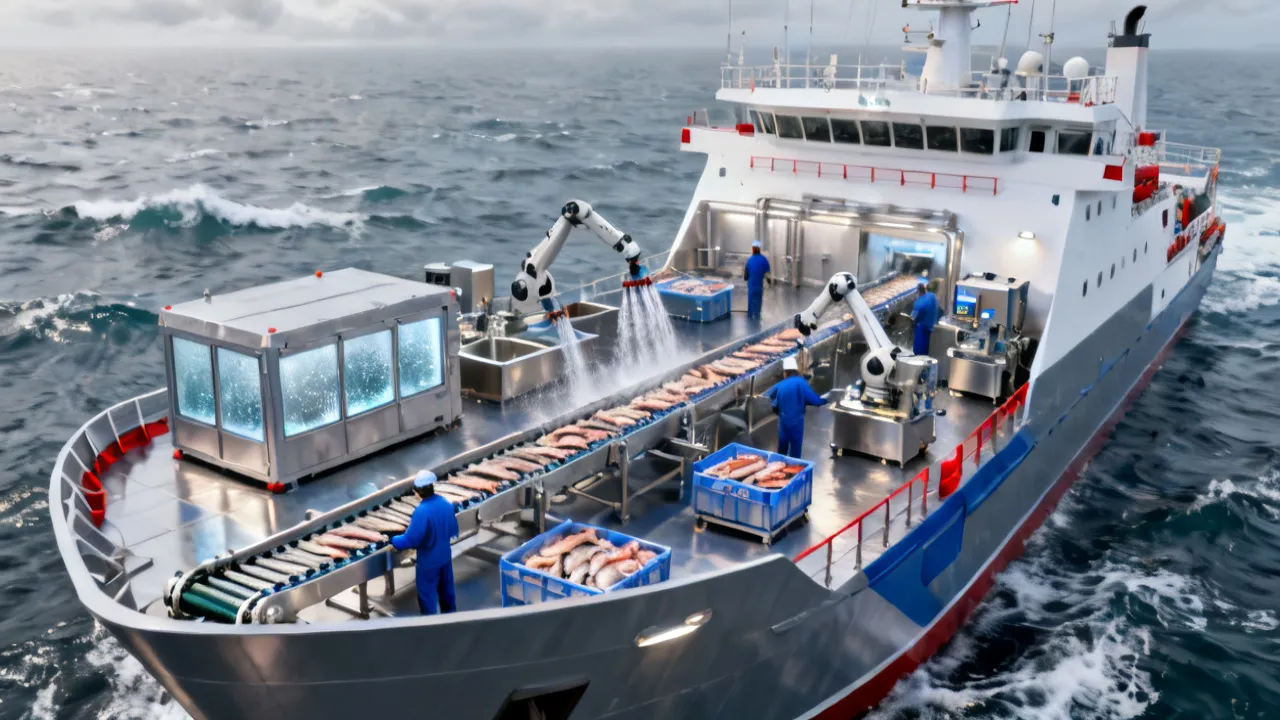
Unveiling the Optimar Rae
An in-depth exploration of the Optimar Rae, a frontrunner in seafood processing. Known for its advanced technology and efficiency, the Optimar Rae plays a pivotal role in modernizing seafood operations. This article delves into its significance, examining how it enhances productivity while maintaining environmental standards, marking a new era in maritime industry advancements.

Mastering Employee Retention Strategies
This article delves into the essential role of an Employee Retention Consultant. Employee retention is crucial for maintaining a competitive edge and fostering a positive work environment. Professional consultants help organizations in developing tailored retention strategies to reduce turnover, increase job satisfaction, and enhance overall productivity. Explore expert insights, strategies, and FAQs in employee retention.